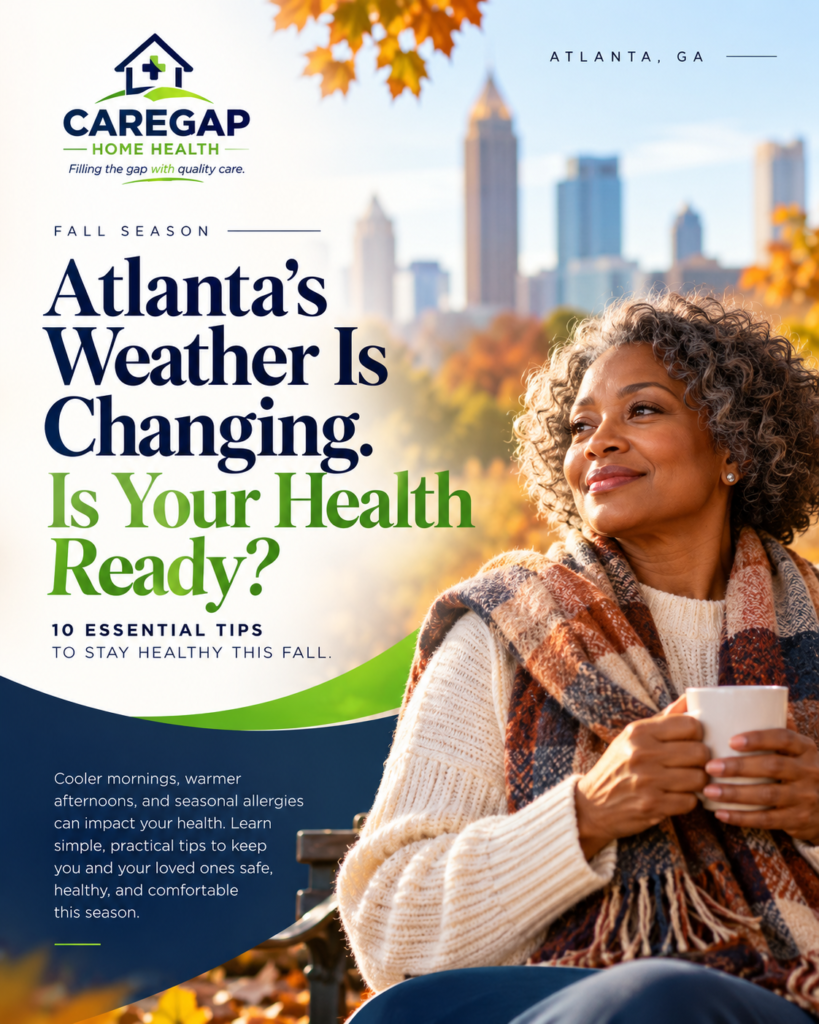
Cool mornings, sunny afternoons, and changing temperatures are here. Here’s how Atlanta families can stay healthy, comfortable, and prepared this fall.
Published: October 24, 2026 | CareGAP Home Health
Fall is settling into Atlanta, Georgia, bringing cooler mornings, pleasant afternoons, colorful leaves, and a welcome break from the summer heat.
But while autumn can be one of the most enjoyable seasons in Georgia, changing weather conditions can also create health challenges, particularly for older adults, young children, and individuals living with chronic medical conditions.
One day, you may leave home wearing a sweater, only to find yourself reaching for lighter clothing by lunchtime. By evening, temperatures can drop again.
These changes are a good reminder to adjust daily routines, prepare our homes, and pay closer attention to seasonal health needs.
At CareGAP Home Health, we believe staying healthy begins with small, consistent actions.
Whether you’re caring for an aging parent, supporting a family member with a chronic condition, or simply trying to keep your household healthy, these practical tips can help you enjoy Atlanta’s fall season safely.
What’s Happening With Atlanta’s Weather Right Now?
As of October 24, 2026, Atlanta is experiencing a stretch of mostly sunny, dry fall weather.
According to the National Weather Service, afternoon temperatures are forecast to remain around the low to mid-70s°F for much of the coming week, while overnight temperatures fall into the upper 40s and low 50s°F.
These conditions make outdoor activities enjoyable, but the difference between daytime and nighttime temperatures means residents should be prepared for cooler mornings and evenings.
Dry and breezy weather may also be uncomfortable for people sensitive to airborne allergens.
At the same time, October marks the beginning of Georgia’s flu season, making respiratory illness prevention particularly important.
Here are 10 ways to protect your health this fall.
1. Dress in Layers to Handle Changing Temperatures
One of the simplest ways to stay comfortable during Atlanta’s fall weather is to dress in layers.
A cool morning may require a sweater or light jacket, while the afternoon may feel warm enough for lighter clothing.
Layering allows you to adjust your clothing without becoming too hot or cold.
Practical tips:
- Wear a lightweight shirt beneath a sweater or jacket.
- Keep a light jacket nearby for evening outings.
- Choose comfortable, weather-appropriate footwear.
- Check the forecast before leaving home.
- Make sure older adults have easy access to warmer clothing.
For older adults, especially those who have difficulty regulating body temperature, appropriate clothing can help maintain comfort as conditions change.
Remember that cold weather itself does not cause influenza or the common cold. Those illnesses are caused by viruses.
However, dressing appropriately can help prevent discomfort and cold-related problems.
2. Protect Yourself Against Seasonal Allergies
Fall in Georgia can bring sneezing, itchy eyes, congestion, and coughing for people with seasonal allergies.
Ragweed pollen is a common autumn trigger, and dry, windy conditions can spread airborne allergens.
Mold spores from damp leaves and outdoor debris may also cause symptoms.
For individuals living with asthma, allergies can sometimes contribute to breathing difficulties.
How to reduce exposure:
- Check local pollen and air-quality reports.
- Keep windows closed when pollen levels are high.
- Shower and change clothes after spending time outdoors.
- Clean indoor surfaces regularly.
- Replace HVAC filters according to manufacturer recommendations.
- Avoid disturbing piles of leaves if you have mold allergies.
- Follow your healthcare professional’s recommended allergy or asthma treatment plan.
If symptoms persist despite treatment, consider speaking with a healthcare professional.
Difficulty breathing, severe wheezing, or swelling of the lips or throat requires urgent medical attention.
3. Prepare for Flu Season Before It Peaks
October is not only the beginning of cooler weather. It also marks the start of influenza season in Georgia.
Influenza is a contagious respiratory infection that can cause fever, coughing, sore throat, fatigue, muscle aches, and other symptoms.
Although many people recover without complications, flu can be especially serious for older adults, young children, pregnant individuals, and people with certain chronic conditions.
Ways to reduce your risk:
- Get your annual flu vaccine if recommended for you.
- Wash your hands regularly with soap and water.
- Cover coughs and sneezes.
- Avoid close contact with people who are sick when possible.
- Stay home when ill and follow public health guidance.
- Improve indoor ventilation and air filtration where practical.
- Discuss other recommended respiratory vaccines with your healthcare professional.
The CDC recommends seasonal influenza vaccination for most people ages six months and older.
Vaccination is particularly important for people at increased risk of severe complications.
Families caring for older adults should also encourage caregivers and frequent visitors to follow appropriate infection-prevention practices.
4. Stay Hydrated Even When You Don’t Feel Thirsty
When temperatures begin to cool, many people naturally drink less water.
However, hydration remains important throughout the year.
Even during mild fall weather, your body needs sufficient fluids to support normal functions.
Older adults may be particularly vulnerable to dehydration because their sense of thirst can become less reliable with age.
Certain medications and health conditions can also affect fluid balance.
Healthy hydration habits include:
- Keeping water within easy reach.
- Offering drinks regularly throughout the day.
- Including water-rich foods such as fruits and vegetables.
- Paying attention to symptoms such as dizziness or unusually dark urine.
- Monitoring hydration more closely during illness or physical activity.
Some individuals with heart failure, kidney disease, or other medical conditions may have specific fluid restrictions.
Always follow their prescribed fluid-management plan rather than encouraging unrestricted water intake.
5. Keep Your Home Comfortable and Safe
As nighttime temperatures begin to drop, households may start using heating systems more frequently.
This is a good time to check that your home is prepared for cooler weather.
A comfortable indoor environment is especially important for older adults, infants, and individuals with medical conditions.
Fall home safety checklist:
- Test smoke alarms and carbon monoxide detectors.
- Have heating systems inspected and maintained when needed.
- Keep portable heaters away from curtains, furniture, and bedding.
- Never use ovens or outdoor grills to heat your home.
- Keep walkways free from clutter.
- Make sure hallways, bedrooms, and bathrooms have adequate lighting.
- Remove loose rugs or other tripping hazards.
- Check that frequently used items are easy to reach.
Families caring for individuals with limited mobility should pay particular attention to fall prevention.
Small home modifications can make everyday movement safer and more comfortable.
6. Support Your Immune System With Healthy Habits
As respiratory illness season begins, people often look for ways to strengthen their immune systems.
There is no single food, vitamin, or supplement that guarantees protection from infections.
However, a balanced lifestyle supports normal immune function and overall well-being.
Focus on:
Balanced nutrition: Include vegetables, fruits, whole grains, protein sources, and other nutrient-rich foods.
Adequate sleep: Maintain a consistent sleep routine that supports your individual needs.
Regular movement: Walking, stretching, and other suitable activities can improve overall health.
Stress management: Make time for rest, enjoyable activities, and social connection.
Preventive healthcare: Stay current with recommended vaccinations, medical appointments, and chronic disease management.
Avoid relying on unproven supplements or home remedies as substitutes for appropriate medical care.
7. Pay Special Attention to Older Adults
For many older adults, fall weather is enjoyable.
However, seasonal changes may require adjustments in daily care routines.
Individuals living with arthritis, heart disease, respiratory conditions, diabetes, or mobility limitations may need additional support.
For example, an older adult with arthritis may experience increased discomfort during certain weather conditions, although responses vary from person to person.
People with chronic lung conditions may also be sensitive to changes in temperature or air quality.
Families and caregivers can help by:
- Checking that appropriate clothing is available.
- Encouraging safe physical activity.
- Monitoring for unusual fatigue, dizziness, or breathing difficulties.
- Supporting medication routines.
- Preparing nutritious meals.
- Reducing fall hazards around the home.
- Helping with transportation to medical appointments.
- Watching for signs of illness.
One of the most important things caregivers can do is recognize changes from an individual’s usual health and functioning.
New confusion, significant weakness, or worsening breathing problems should never be dismissed as simply a reaction to the weather.
8. Enjoy Outdoor Activities Safely
Fall can be an excellent time to enjoy Atlanta’s parks, walking trails, and neighborhood activities.
The milder temperatures can make outdoor exercise more comfortable than during the peak summer months.
Regular physical activity supports heart health, mobility, mood, and general well-being.
Tips for safe outdoor activity:
- Check the forecast and air quality before heading outside.
- Wear supportive, comfortable shoes.
- Begin with gentle activity and increase gradually.
- Carry water.
- Be cautious around wet leaves and uneven sidewalks.
- Choose well-lit walking routes.
- Take breaks when needed.
For older adults or individuals recovering from illness, exercise should be appropriate for their health and mobility.
A short, comfortable walk may be more beneficial than attempting strenuous activity without adequate preparation.
9. Know the Difference Between Allergies, Colds, and Flu
During the fall, coughing, sneezing, and congestion become more common.
But not every respiratory symptom has the same cause.
Understanding the differences can help you decide when to seek medical advice.
Seasonal Allergies
Allergies often cause sneezing, itchy eyes, a runny nose, and nasal congestion.
They typically do not cause fever.
Common Cold
A cold may cause a sore throat, runny nose, cough, congestion, and sometimes a mild fever.
Symptoms often develop gradually.
Influenza
Flu can cause fever, chills, body aches, headache, cough, and significant fatigue.
Symptoms may begin suddenly, although not everyone with flu develops a fever.
COVID-19 and Other Respiratory Infections
COVID-19 and other respiratory infections can cause symptoms similar to colds or flu.
Because symptoms overlap, testing and professional medical evaluation may sometimes be necessary.
Important: Symptoms alone cannot reliably distinguish all respiratory infections.
Seek medical advice if symptoms are worsening, persistent, or concerning, particularly for people at higher risk of complications.
Severe difficulty breathing, persistent chest pain, new confusion, or inability to stay awake requires emergency medical attention.
10. Check on Family Members Who Live Alone
Seasonal wellness is not only about temperature, clothing, and nutrition.
It is also about connection.
Older adults living alone may face challenges with grocery shopping, transportation, household tasks, and maintaining regular social interaction.
As days become shorter and routines change, families should make an effort to stay connected.
A simple phone call or visit can help identify concerns before they become larger problems.
Consider checking whether your loved one:
- Has enough groceries and essential supplies.
- Is taking medications as prescribed.
- Has reliable heating and a safe home environment.
- Can attend important medical appointments.
- Is eating and drinking adequately.
- Has opportunities for companionship and meaningful activities.
Sometimes, maintaining good health begins with knowing that someone is paying attention.
How CareGAP Home Health Supports Families During Seasonal Changes
At CareGAP Home Health, we recognize that every season brings different needs for individuals and families.
For some households, fall is a time of increased activity and family gatherings.
For others, it may mean additional concerns about respiratory illnesses, mobility, chronic conditions, or caring for an aging loved one.
Our goal is to help families access appropriate home-based assistance that supports comfort, dignity, and independence.
Depending on individual needs, eligibility, and service arrangements, CareGAP Home Health offers services including:
Personal Care Services: Assistance with activities of daily living, such as bathing, dressing, grooming, and other personal care needs.
Companion and Sitter Services: Companionship, supervision, and assistance with appropriate everyday routines.
Skilled Nursing Services: Nursing care provided by appropriately licensed professionals when clinically indicated and authorized.
Support for Family Caregivers: Helping families explore suitable care arrangements when additional assistance is needed.
Our team understands that care is not just about completing tasks. It is about treating people with respect and helping families feel supported.
Frequently Asked Questions About Atlanta’s Fall Weather
Why does Atlanta feel cold in the morning but warm in the afternoon?
Fall temperatures can vary significantly between daytime and nighttime as seasonal weather patterns change. Dressing in layers can help maintain comfort.
Can cold weather cause the flu?
No. Influenza is caused by a virus. However, respiratory infections often become more common during cooler seasons for several reasons, including changes in indoor activities and exposure patterns.
Are fall allergies common in Georgia?
Yes. Ragweed pollen, mold spores, and other allergens can contribute to seasonal symptoms in susceptible individuals.
Should older adults drink as much water in the fall as in summer?
Hydration remains important in every season. Individual fluid needs vary, and some people require medically prescribed fluid restrictions.
What is the most important health precaution during flu season?
Annual influenza vaccination is a key preventive measure for eligible individuals. Good hygiene, cleaner indoor air, and appropriate precautions around illness also help reduce risk.
Final Thoughts: A Healthier Fall Starts With Small Steps
Atlanta’s fall weather gives us many reasons to enjoy the outdoors, spend time with loved ones, and appreciate the changing season.
But it is also a reminder that our health needs attention throughout the year.
Simple steps such as dressing appropriately, staying hydrated, reducing allergy exposure, preparing for flu season, and checking on older family members can make a meaningful difference.
At CareGAP Home Health, we encourage families to be proactive rather than waiting until everyday challenges become overwhelming.
Whether you are caring for yourself, your children, or an aging loved one, remember that prevention, preparation, and compassion all play important roles in healthy living.
This fall, stay informed. Stay prepared. Stay connected. And most importantly, take care of one another.
CareGAP Home Health
Filling the Gap With Quality Care.
If you or a loved one needs additional support with everyday care at home, our team is available to discuss our services and care options.
Phone: 706-870-5182
Email: info@caregaphhc.com
Website: www.caregaphhc.com
Proudly serving families across our Georgia service areas.
Medical disclaimer: This article provides general health education and does not replace professional medical advice, diagnosis, or treatment. Weather conditions and public health recommendations can change. Consult your healthcare professional for advice specific to your health needs.