

The holidays are often the first time in months that families see Mom or Dad in person — not over the phone, not on a quick FaceTime, but in their own home, across a full day or a long weekend. And that’s when things show up that a phone call can hide.
As a licensed pharmacist and the owner of CareGAP Home Health in Braselton, I’ve seen how often the earliest warning signs are small: a pill bottle that’s still full when it should be half empty, a fridge with nothing fresh in it, a new bruise nobody mentions. None of these means your parent can’t live at home. But together, they can tell you it’s time for a conversation — and maybe a little help.
Here’s the checklist I’d use this Thanksgiving and Christmas if I were walking into my own parent’s house.
Part 1: The Medicine Cabinet (Start Here)

Medication problems are one of the most common — and most preventable — reasons older adults end up in the emergency room. They’re also easy to spot if you know what to look for.
1. Pill counts that don’t add up
Look at the fill date on a daily medication and count what’s left. If a 30-day bottle filled three weeks ago is nearly full, doses are being missed. If it’s empty after ten days, doses may be getting doubled. Both are risky, especially with blood pressure, blood thinner, diabetes, and heart medications.
2. Duplicate or “mystery” medications
Watch for the same drug under two names (a brand-name bottle and a generic bottle from different pharmacies), old prescriptions that were supposed to be stopped, or prescriptions from several different doctors who may not know about each other. Expired bottles mixed in with current ones are another red flag.
3. Over-the-counter “sleep” and “PM” products
This is the one I flag most often as a pharmacist. Many nighttime and “PM” pain relievers and sleep aids contain diphenhydramine, an antihistamine that can cause confusion, dizziness, constipation, and urinary problems in older adults — and raise the risk of falls. Products like these also often contain acetaminophen, which can quietly double up with another acetaminophen-containing medication. If you see them, mention them to your parent’s doctor or pharmacist.
4. Unopened refills or missed pharmacy pickups
A stack of pharmacy bags that were never opened, or a parent who says they “ran out a while ago,” can mean the routine has slipped — whether from memory, cost, mobility, or simply feeling overwhelmed.
Pharmacist tip — the “brown bag” check: Gather every prescription, over-the-counter medicine, vitamin, and supplement in the house into one bag and bring it to your parent’s pharmacist or next doctor’s visit. Ask for a full medication review. It’s one of the simplest, most effective safety steps a family can take.
Part 2: The Kitchen and the Home
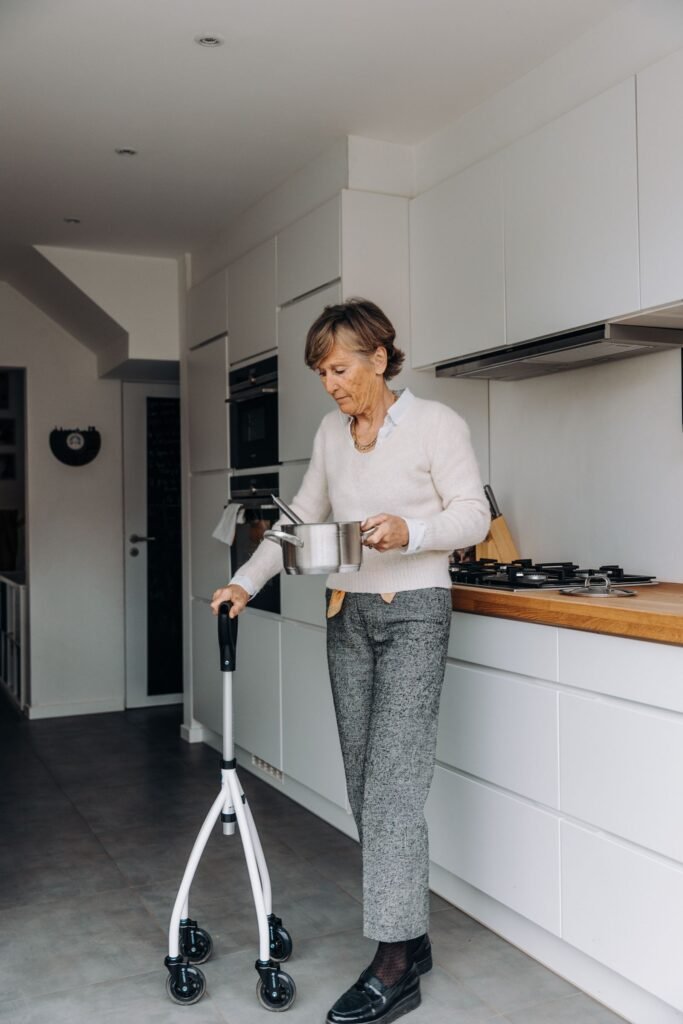
5. An empty — or expired — refrigerator
Check expiration dates, look for spoiled food, and notice whether there’s anything fresh. A fridge of condiments and takeout containers can mean shopping and cooking have become hard. Unexplained weight loss or clothes that suddenly fit loosely point the same direction.
6. Piled-up mail and unpaid bills
Unopened mail, late notices, or repeated payments to the same company can be an early sign that memory or organization is slipping. It can also be a sign your parent is being targeted by scams, which is worth gently checking.
7. A house that’s harder to keep up
If someone who always kept a tidy home now has dishes stacking up, laundry piling, or a bathroom that hasn’t been cleaned, it’s usually not about caring less — it’s about energy, pain, balance, or eyesight making everyday chores harder.
Part 3: Safety and Mobility

8. Bruises, scrapes, or “I just tripped”
Unexplained bruises, a new limp, or stories about near-falls deserve attention. Falls are a leading cause of injury for older adults, and many go unreported because people worry about losing their independence. Ask whether any medications were recently started or changed — several can affect balance.
9. Struggling with stairs, chairs, or the shower
Watch how your parent gets up from a low chair, climbs the stairs, or steps in and out of the tub. Holding onto furniture to cross a room (“furniture walking”) or avoiding the upstairs entirely are signs that the home may need safety changes — or that bathing and dressing help would make a real difference.
10. New dents or scrapes on the car
Take a quick walk around the car. New damage, getting lost on familiar routes, or friends quietly mentioning concerns about driving are worth a careful, respectful conversation — and a plan for how your parent will still get to appointments, church, and the store.
Part 4: Mood, Memory, and Self-Care
11. Changes in hygiene, mood, or memory
Wearing the same clothes for days, skipping showers, repeating the same story several times in one visit, missing appointments, or pulling away from friends and activities they used to love. Any of these can have many causes — including depression, infection, hearing loss, or a medication side effect — so they’re a reason to see the doctor, not a reason to jump to conclusions.
12. A caregiving spouse who is running on empty
Sometimes the person who needs help isn’t the one you expected. If one parent has been quietly caring for the other, look closely at them too. Exhaustion, missed doctor visits of their own, irritability, or saying “I’m fine” a little too quickly can mean the caregiver needs support before they burn out.
You Noticed Something. Now What?
- Don’t stage an intervention at the dinner table. Pick a quiet moment, one-on-one, and lead with what you noticed and why you care — not with what they “can’t do anymore.”
- Ask what would make life easier. Most older adults want to stay at home. Framing help as the thing that keeps them at home changes the whole conversation.
- Loop in the doctor and pharmacist. Share what you saw, especially anything about medications, falls, weight, or memory.
- Start small. A few hours a week of help with bathing, meals, housekeeping, errands, or companionship can be enough to stabilize things — and you can add more as needs change.
- Make a plan before everyone goes home. Decide who will follow up, and when. Good intentions fade fast after the holidays.
How CareGAP Home Health Can Help

CareGAP Home Health is a pharmacist-owned, private-duty home care agency based in Braselton, serving families across Metro Atlanta and Northeast Georgia — including Barrow, Jackson, Hall, Gwinnett, Forsyth, Walton, Oconee, Fulton, DeKalb, and Cobb counties.
Our screened, insured caregivers provide personal care, companion care, light housekeeping, and medication reminders, and every care plan is built with a pharmacist’s eye on medication safety. Whether your parent needs a few hours a week or more consistent support, we’ll help you figure out what makes sense — no pressure.
Home for the holidays and worried about what you saw? Call us at (706) 870-5182 for a free, no-obligation conversation about your parent’s needs.
This article is for general educational purposes and is not medical advice. Always talk with your loved one’s doctor or pharmacist before starting, stopping, or changing any medication. If you see signs of a medical emergency, call 911.