
When an aging parent or loved one starts needing extra help at home, families often know something needs to change—but they may not know exactly what kind of help to look for.
You may have heard the words home caregiver, personal care aide, or home care, but what does a caregiver actually do when they come into your loved one’s home?
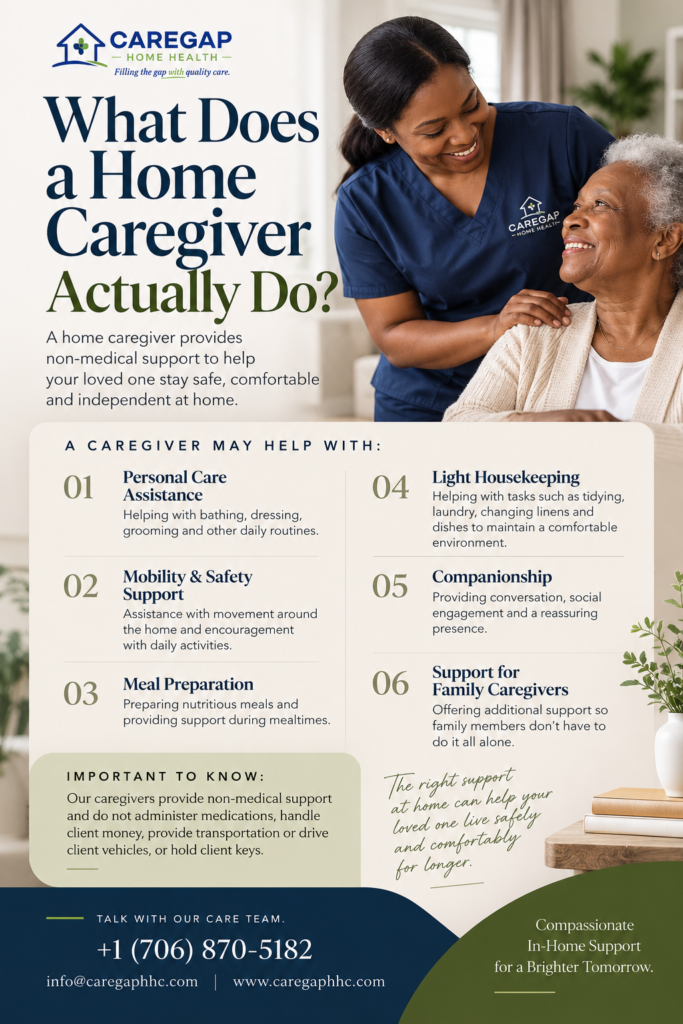
A home caregiver provides practical, non-medical support that can help a person remain safer, more comfortable, and more independent in familiar surroundings.
Here are some of the ways a caregiver may help.
1. Personal Care and Daily Routines
Everyday activities can become more difficult with age, illness, disability, or reduced mobility.
A caregiver may assist with activities such as bathing, dressing, grooming, toileting, and other personal-care routines.
For many families, this is particularly valuable when a loved one wants to remain at home but can no longer manage these tasks safely without assistance.
2. Mobility and Safety Support
Getting around the house isn’t always as simple as it once was.
A caregiver can provide assistance with routine movement around the home and help a client complete daily activities more safely.
Caregivers can also pay attention to changes or concerns during their time with a client and communicate appropriate observations to the care team or family.
3. Meal Preparation
Proper nutrition can become challenging when someone has difficulty shopping, standing for extended periods, or preparing meals.
A home caregiver may help prepare meals and provide assistance during mealtimes according to the client’s established care plan.
Sometimes, having another person present at mealtime can make a meaningful difference too.
4. Light Housekeeping
Home care isn’t a professional cleaning service, but caregivers may assist with light household tasks related to maintaining a comfortable living environment.
Depending on the care plan, this can include tasks such as tidying the client’s immediate living area, changing linens, doing laundry, or washing dishes.
The goal is to support the person’s day-to-day life at home.
5. Companionship
Care isn’t only about completing tasks.
Older adults who spend significant amounts of time at home may benefit from regular human interaction. A caregiver can provide conversation, social engagement, encouragement, and a reassuring presence.
That companionship can also provide family members with some peace of mind knowing their loved one isn’t spending every day completely alone.
6. Support for Family Caregivers
Many families begin by doing everything themselves.
A daughter stops by before work. A son handles evenings. A spouse manages throughout the day. Other relatives fill in whenever they can.
Over time, that can become difficult to sustain.
Professional home care can provide additional support so that family members don’t have to carry every aspect of day-to-day caregiving alone.
What Doesn’t a CareGAP Caregiver Do?
This is just as important to understand.
At CareGAP Home Health, our caregivers provide non-medical support based on the client’s individualized plan of care.
Our caregivers do not administer medications, handle a client’s money, provide transportation or drive a client’s vehicle, or hold client keys.
Clear boundaries help protect both clients and caregivers while ensuring families understand exactly what services they are receiving.
How Do You Know When It’s Time to Consider a Caregiver?
There isn’t one single moment when every family should seek help.
Instead, look for changes.
Maybe Mom isn’t bathing as regularly. Dad is struggling to prepare meals. The house isn’t being maintained the way it once was. Everyday activities are taking much longer. Or perhaps the family member providing most of the care is simply becoming exhausted.
Needing assistance doesn’t automatically mean someone has to leave home.
Sometimes, the right support at home is what helps a person continue living there.
Looking for Home Care Support?
Every family’s situation is different. The first step is understanding what your loved one can still do independently, where they’re struggling, and what kind of assistance could make daily life safer and more manageable.
CareGAP Home Health works with families to provide compassionate in-home support based on each client’s individual needs.
Talk with our care team:
Phone: +1 (706) 870-5182
Email: info@caregaphhc.com
Website: www.caregaphhc.com
CareGAP Home Health — Filling the gap with quality care.