Understanding Which Type of Care Is Right for Your Loved One
When a loved one needs help at home, one of the first questions families ask is:
“Do they need skilled nursing or personal care?”
Although these services are often mentioned together, they serve different purposes. Understanding the difference can help you make the best decision for your loved one’s health, safety, and quality of life.
What Is Skilled Nursing?
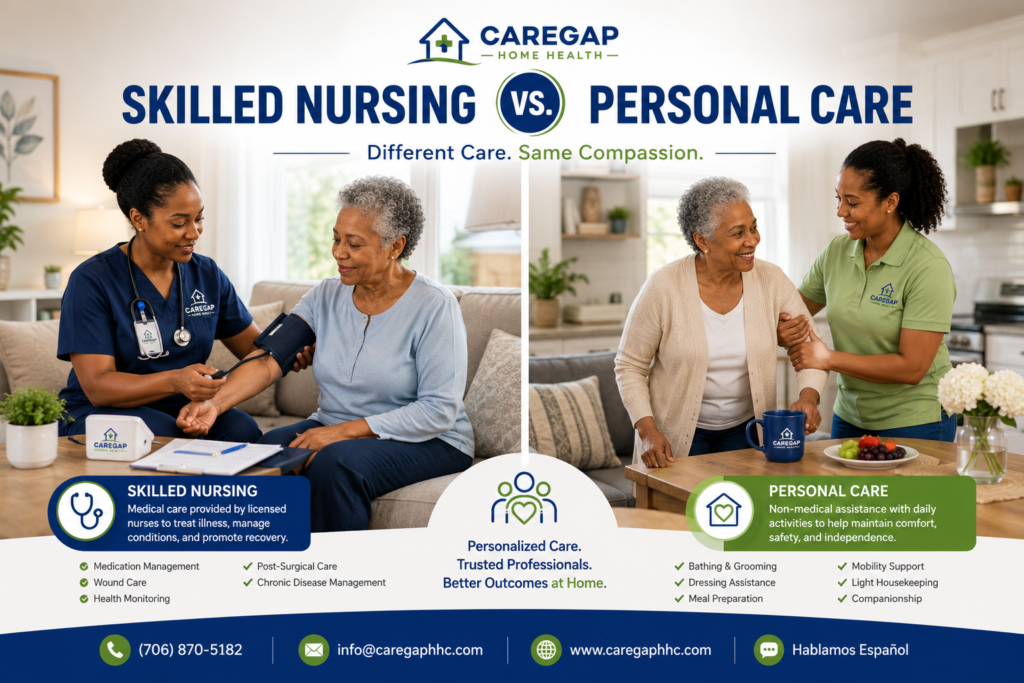
Skilled nursing is medical care provided by licensed healthcare professionals, such as Registered Nurses (RNs) or Licensed Practical Nurses (LPNs), under a physician’s direction.
These services require clinical knowledge and cannot be performed safely by someone without medical training.
Skilled Nursing Services May Include:
- Medication management
- Wound care and dressing changes
- Injections
- Monitoring vital signs
- Chronic disease management
- Post-surgical care
- Catheter care
- IV therapy (when prescribed)
- Patient and caregiver education
Skilled nursing is often recommended after a hospital stay, surgery, or when managing complex medical conditions.
What Is Personal Care?
Personal care focuses on helping individuals with everyday activities so they can remain comfortable, safe, and independent at home.
Unlike skilled nursing, personal care does not involve medical treatment.
Personal Care May Include:
- Bathing and grooming
- Dressing assistance
- Meal preparation
- Light housekeeping
- Mobility assistance
- Toileting support
- Transportation to appointments
- Companionship
These services improve daily living while helping individuals maintain dignity and independence.
Key Differences
| Skilled Nursing | Personal Care |
| Medical care provided by licensed nurses | Non-medical assistance with daily activities |
| Requires a physician’s order | Usually does not require medical supervision |
| Treats illnesses and medical conditions | Supports comfort, safety, and independence |
| Includes wound care, medications, and health monitoring | Includes bathing, dressing, meals, and companionship |
Can Someone Receive Both?
Yes.
Many patients benefit from a combination of skilled nursing and personal care.
For example, a patient recovering from surgery may need a nurse to monitor their recovery and provide wound care while also receiving assistance with bathing, meal preparation, and moving safely around the home.
Combining both services creates a more complete care plan tailored to the patient’s unique needs.
How CareGap Home Health Can Help
At CareGap Home Health, we understand that every patient’s situation is different.
Our experienced healthcare professionals work closely with physicians and families to determine the right level of care, whether it’s skilled nursing, therapy services, or other personalized home health support.
Our mission is to help patients recover safely, maintain independence, and enjoy the comfort of home while receiving compassionate, high-quality care.
Final Thoughts
Choosing the right type of care doesn’t have to be confusing.
Understanding the difference between skilled nursing and personal care allows families to make informed decisions that support both recovery and long-term well-being.
If you’re unsure which services your loved one may need, the CareGap Home Health team is here to answer your questions and guide you every step of the way.
Contact CareGap Home Health
📞 (706) 870-5182
📧 info@caregaphhc.com
🌐 www.caregaphhc.com
Hablamos Español.
CareGap Home Health
Filling the Gap with Quality Care.